Cold Email Outreach: Templates and Sequences That Get Replies
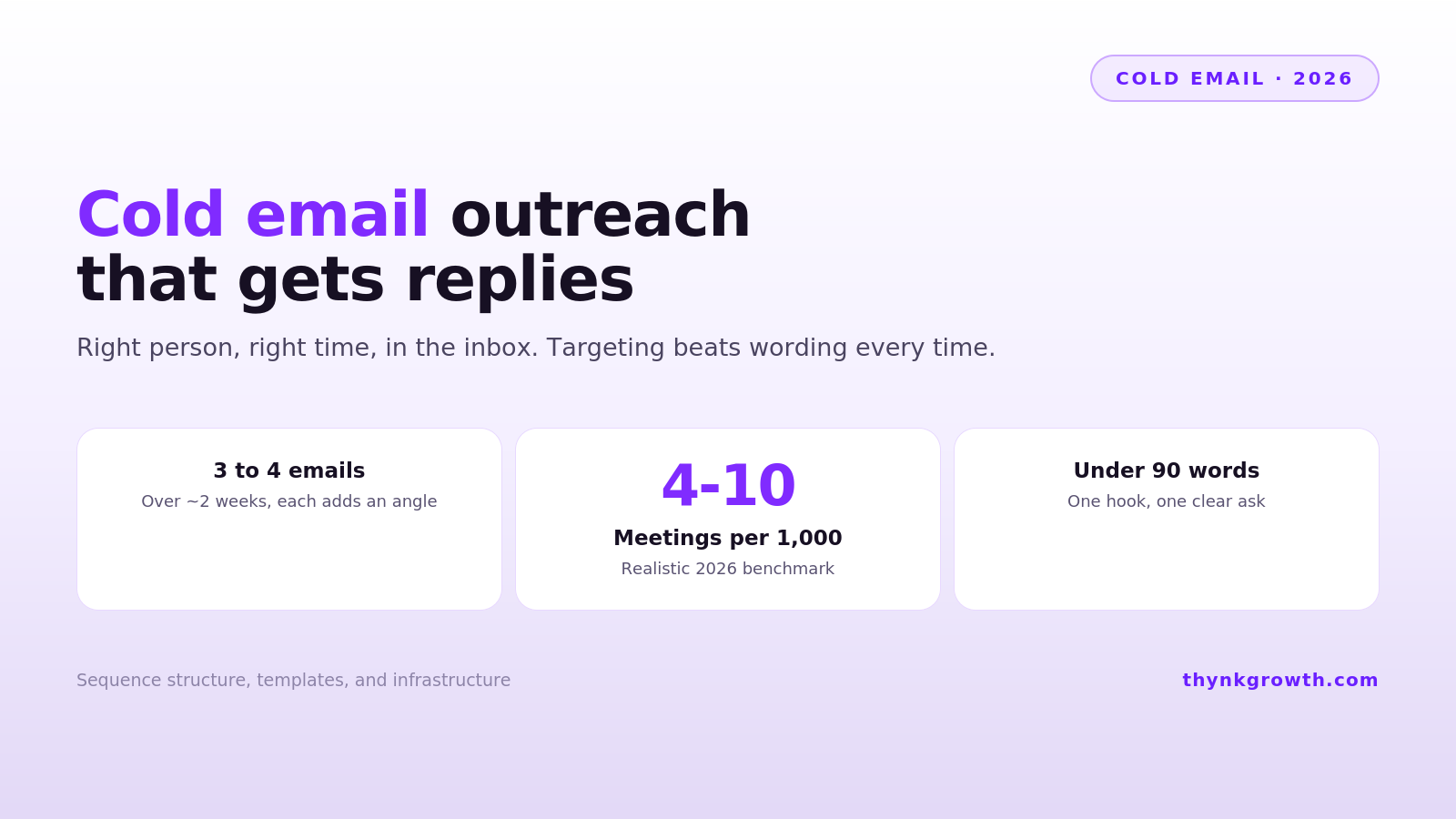
Cold email outreach that gets replies in 2026 comes down to three things: reaching the right person at the right time, saying something specific and relevant, and landing in the inbox in the first place. A good cold email sequence is short, three to four emails over roughly two weeks, each one tight, each one adding a new angle rather than nagging. The single biggest reason cold email fails is not the template, it is the target and the timing. A mediocre template to the right person at the right moment beats a brilliant template to a random list every time.
I run cold email daily as a GTM partner. A realistic 2026 benchmark for a decent campaign is 1,000 prospects producing a 2 to 5 percent reply rate, with 30 to 50 percent of replies positive, which is roughly 4 to 10 meetings per 1,000. Anyone promising dramatically more is either selling you something or ignoring deliverability. Here is how to actually hit that.
The sequence structure that works
Keep it to three or four emails. The first email earns attention with a relevant hook, ideally tied to a signal like a new role or a funding round, and makes one clear ask. The second, two to three days later, adds a proof point or a different angle. The third reframes the value or shares a specific result. An optional fourth is a short, graceful breakup. Do not send seven follow-ups that just say "bumping this." Each touch must earn its place. Ignore open rates entirely in 2026; they are unreliable. Measure replies and meetings.
A template pattern, not a script
The best cold email templates are patterns you personalize, not scripts you paste. A pattern that works: one line that shows you know something specific about them, one line that connects it to a problem you solve, one line of proof, and one low-friction ask. Keep it under 90 words. Use spintax where you must send at volume, but a genuinely unique email per prospect, which needs no spintax, always wins. The moment a template reads like a template, it is dead.
The part templates cannot fix
Here is the truth most template posts skip. The best-written cold email in the world does nothing if it lands in spam. Inbox placement comes from secondary sending domains, mailboxes warmed for two to three weeks before you send, keeping bounce rates under 2 percent with verified lists, and controlled volume of about 15 cold emails per mailbox per day. We cover this in detail in our guides on email warm-up, domain and mailbox setup, and how many mailboxes you need. Copy is maybe 20 percent of cold email results. Targeting, timing, and infrastructure are the other 80.
The honest tradeoff
If you take one thing from this, let it be that you cannot template your way out of a bad list. Spend more time on who you email and when than on wording, and give the campaign a full quarter with messaging iterated every two weeks before you judge it. That is how real cold email works, and it is the system we build and run for clients as a GTM partner.
How do I write cold email that gets replies?
Reach the right person at the right time, say something specific and relevant in under 90 words, make one low-friction ask, and follow up two or three times with new angles. The target and timing matter more than the wording. A relevant message to the right person beats a clever one to a random list.
What is a good cold email sequence length?
Three to four emails over about two weeks. The first earns attention with a relevant hook, the next two add proof and new angles, and an optional fourth is a short breakup. Avoid long strings of "just bumping this" follow-ups, since each touch should add something.
What reply rate is realistic for cold email in 2026?
A decent campaign sees a 2 to 5 percent reply rate, with 30 to 50 percent of replies positive, which is roughly 4 to 10 meetings per 1,000 prospects. Signal-led targeting can push this higher. Anyone promising far more is usually ignoring deliverability.
Do cold email templates still work?
Templates work as patterns you personalize, not scripts you paste. The moment an email reads like a mass template, replies drop. Use a repeatable structure, personalize the specifics for each prospect, and remember that copy is a minority of what decides results. ---
Related reading
Want this running for your pipeline?
Book a free strategy call. We map your outbound plan whether you work with us or not.
Book a free strategy call